August 2026 monthly column by Janelle Saffin MP, State Member for Lismore.
LANDHOLDERS across the Northern Rivers are working to repair creeks and riverbanks damaged by the 2022 floods, replanting native vegetation along 40km of riverbanks, fencing off waterways, and improving how water moves as part of a pilot program.
In our region there are a total of 35 Caring for Catchments projects underway on private land across four catchments, to stabilise waterways and support long-term catchment health.
Caring for Catchments is a great, combined effort. It is funded by the Albanese Government through the Northern Rivers Recovery and Resilience Program, administered by the NSW Reconstruction Authority (RA) and delivered by the North Coast Regional Landcare Network in partnership with landholders and communities.
I advocated for this program in the aftermath of the 2022 floods that ripped through our rivers, riverbanks and landscapes. I know how vital this on-ground work is to our landholders as they repair and strengthen our catchments.
The work focuses on practical, on-ground measures, restoring riparian corridors and improving how water is stored and moves through the landscape.
So far, about 62 hectares have been revegetated, 40km of riverbank restored, and more than 84,000 native trees and sedges planted, to reduce erosion and improve the condition of creeks and river systems.
Nearly 7,000 people have participated in the initiative through training, education and project delivery, helping build our local capability to continue this work.
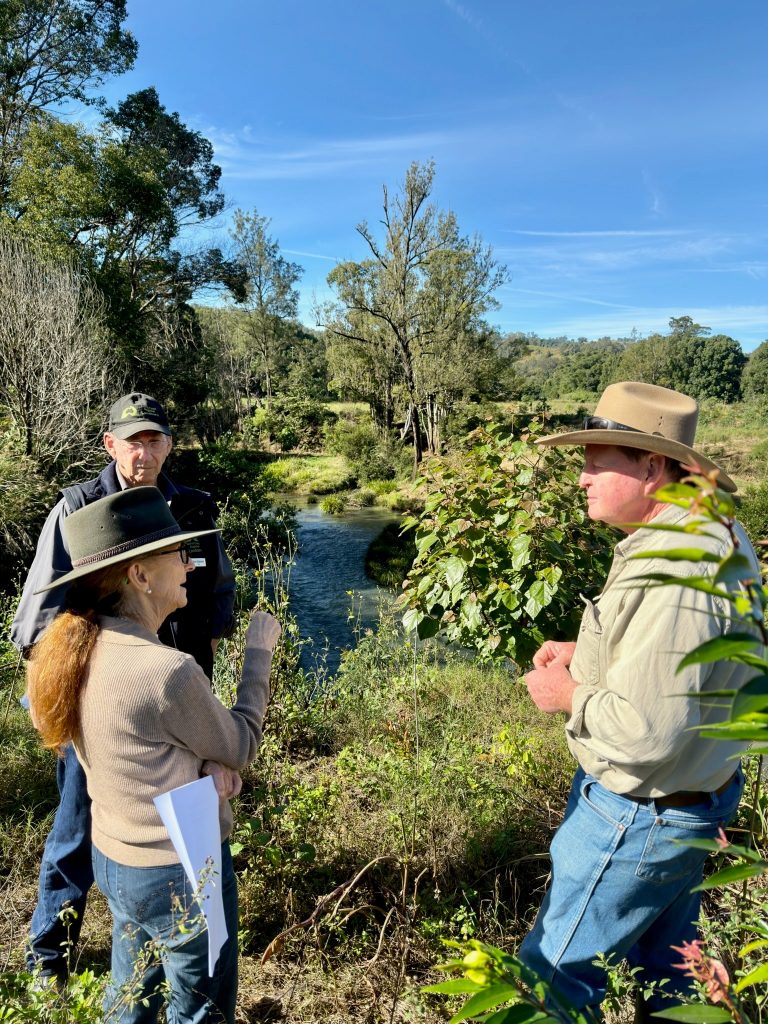
I recently visited one of the projects, at Jeff Imeson’s property at Coffee Camp,where revegetation, fencing and water management are already improving the creek condition and water quality at the confluence of Bishops and Goolmangar creeks.
This project includes planting around 11,000 native trees, managing invasive weeds, installing cattle exclusion fencing and providing off-stream watering, alongside ongoing maintenance to stabilise creek banks and reduce erosion pressure.
These types of nature-based solutions grounded in science are a critical part of the larger flood resilience strategy.
Aboriginal Driver Instructor program
In a welcome inititiative, Transport for NSW has set up a program to train Aboriginal driving instructors, boosting access to culturally safe licensing support in communities across the state.
Everyone deserves the opportunity to gain their licence, and as we know, it is particularly important in regional areas where having a drivers licence can be critical for securing a job.
This Australian-first initiative has been established as part of Transport for NSW’s successful Driver Licensing Access Program (DLAP) and will help more Aboriginal people access culturally safe support from within their own communities.
By training Aboriginal driving instructors, the Government is investing in local leaders, creating meaningful employment opportunities and ensuring communities have trusted local people delivering driver education.
The first cohort includes 20 Aboriginal participants from the Far West, Western, Northern and Southern regions of NSW. Once training is complete, the initiative will expand to more communities across the state.
Discounted Rego
And in other motoring news, a reminder that from now on local drivers will begin receiving their vehicle registration renewal notices with a discount applied.
Drivers of privately owned vehicles will receive $100 off their rego, while motorcyclists will receive an $80 discount.
Caption: Janelle Saffin with Jeff Imeson at his Coffee Camp property and Jim Kinkead (left) the President of North Coast Regional Landcare.